
Sleep Anxiety: Why Your Mind Races at Night and How to Quiet It
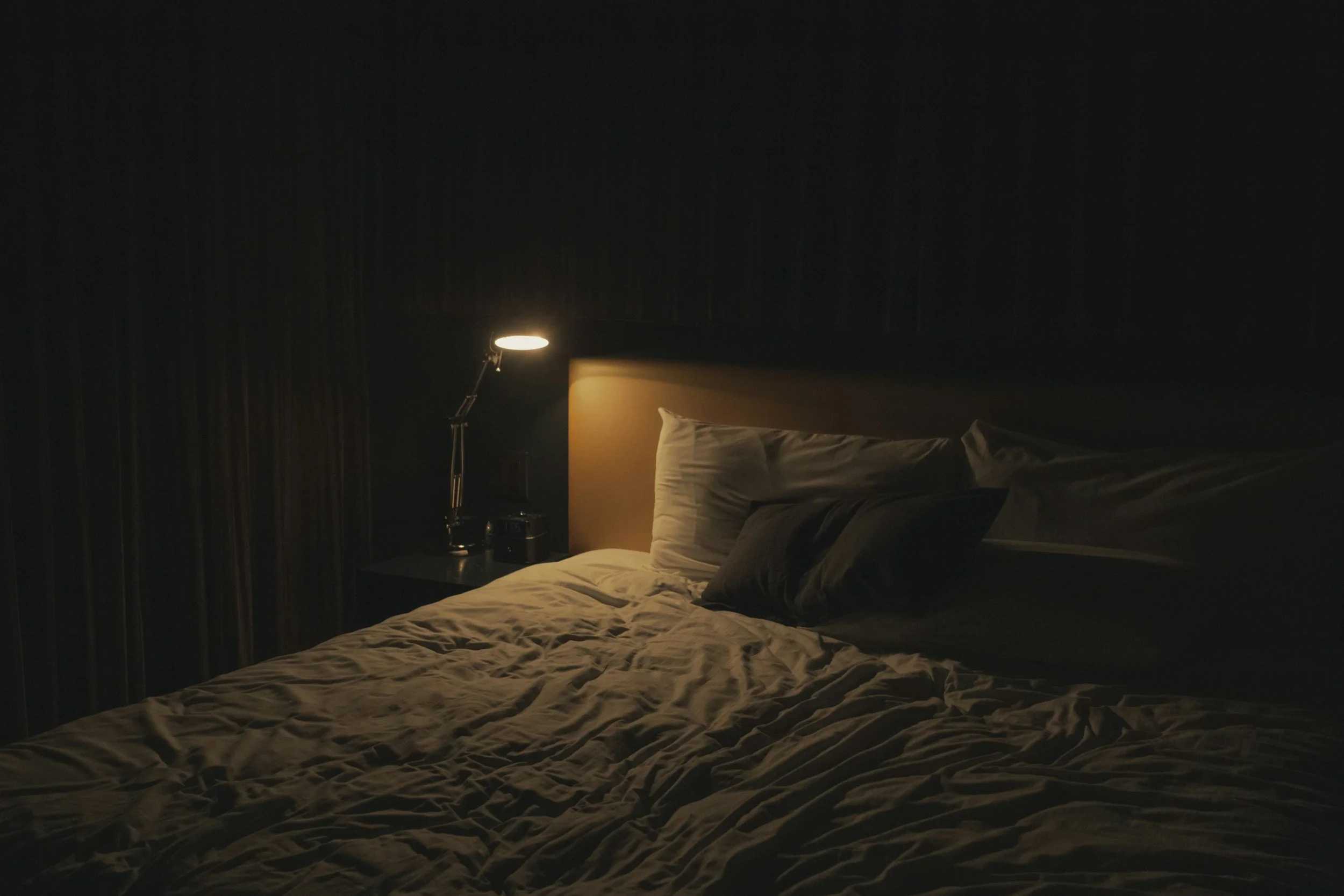
A quiet bedroom at night can feel anything but peaceful when sleep anxiety and racing thoughts make it difficult to unwind and fall asleep.
You're exhausted all day. Then your head hits the pillow and your brain switches on. You replay a conversation from work. You run through tomorrow's list. You check the clock, do the math on how many hours you have left, and feel your chest tighten.
If that sounds familiar, you may be dealing with sleep anxiety. It's one of the fastest-growing mental health searches this year. Searches for the term are up 139% from last year (Rising Trends). You are far from alone, and there are proven ways to break the cycle.
What is sleep anxiety?
Sleep anxiety isn't a formal diagnosis. It's an everyday term for worry or fear that shows up around bedtime, or worry about sleep itself. It can look like:
Racing thoughts as soon as you lie down
Dreading bedtime because you expect another bad night
Waking at 2 or 3 a.m. with your heart pounding
Watching the clock and counting the hours you have left
Feeling tired and wired at the same time
For some people, it's ordinary life stress that shows up at night because night is the first quiet moment of the day. For others, the fear shifts to sleep itself: "If I don't sleep tonight, tomorrow will be a disaster." That second kind can keep going long after the original stress has passed.
Why sleep anxiety and insomnia feed each other
Anxiety and poor sleep travel together. Roughly 40 to 60 percent of adults with anxiety disorders report significant insomnia (AnxietyResearch). Among people with generalized anxiety disorder, a recent review puts the number above 80 percent (PubMed).
The link runs both ways. A Norwegian study followed more than 25,000 adults for 11 years. It found that ongoing insomnia predicted new anxiety disorders later, even after accounting for anxiety at the start (AnxietyResearch).
So the cycle goes like this. Worry keeps you awake. Lost sleep makes tomorrow's worries feel bigger. Bigger worries keep you awake again. The good news is that you can break in at either point.
Winter can make this harder. Shorter days, less sunlight and holiday stress pile on at the same time. If your sleep slipped when the clocks changed, that isn't in your head. It's a real shift your body is adjusting to, and the steps below can help it find its rhythm again.
Why "just relax" doesn't work
Most people with sleep anxiety have heard the standard advice: no screens, less caffeine, a cool, dark room. Those habits help, but on their own they rarely fix the problem. The VA and Department of Defense guideline recommends against sleep hygiene tips as a standalone treatment (Health.mil).
Trying hard to sleep also backfires. Sleep happens when your body feels safe. It isn't something you can force. The harder you push, the more alert you become.
What actually helps: CBT for insomnia
The treatment with the strongest evidence is cognitive behavioral therapy for insomnia, or CBT-I. The American College of Physicians recommends it as the first treatment for adults with chronic insomnia, ahead of sleep medication (ACP). CBT-I usually includes:
Retraining your bed. Use the bed for sleep, not for scrolling or worrying. If you can't sleep, get up, do something calm in dim light, and return when you feel sleepy. Over time your brain links the bed with sleep instead of with stress.
A steady schedule. Wake up at the same time every day, even on weekends. A therapist may also help you briefly limit your time in bed so your sleep becomes deeper and more solid.
Changing sleep thoughts. "If I don't get eight hours, I can't function" becomes "I've gotten through tired days before."
Calming your body. Breathing and relaxation skills lower the physical alarm that keeps you awake.
CBT-I works in person and through telehealth (Canadian Family Physician). If you take sleep medication, keep talking with your prescriber. The ACP notes that medications should ideally be used no longer than four to five weeks while CBT-I skills handle the long term (ACP).
Five things to try tonight
Schedule worry time earlier in the evening. Spend 20 to 30 minutes writing down what's on your mind and one next step for each item. Do it several hours before bed. When a worry shows up later, remind yourself it has a slot tomorrow. A review of seven trials found this reduced how often and how long people worried (Springer). One trial didn't see sleep improve from this step alone, so pair it with the others (White Rose).
Keep the same wake-up time. It's the anchor for your body clock.
Get out of bed if you're stuck. Lying there frustrated teaches your brain the wrong lesson.
Turn the clock around. Counting hours adds pressure without adding sleep.
Slow your exhale. Breathe in for four counts and out for six. A longer exhale tells your body it's safe.
When to talk to a therapist
Chronic insomnia means trouble sleeping at least three nights a week for at least three months (ACP). Reach out if that sounds like you, or if:
Anxiety follows you through the day, not just at night
You rely on alcohol or other substances to fall asleep
You wake up with panic attacks
Nightmares or memories of a hard experience keep you up
Sleepless nights often sit on top of anxiety, depression, trauma or substance use. Those are the areas our therapists work on every day. Hope Mountain offers in-person therapy in Colorado Springs and online therapy anywhere in Colorado.
Ready to sleep better? Text or call our intake coordinator at (719) 330-5114, or email admin@myhopemountain.org.
If you are in crisis, call or text 988, or call Colorado Crisis Services at 1-844-493-8255 (text TALK to 38255) (Colorado Department of Human Services). In an emergency, call 911. Our text line is not for emergencies.